

Innovation begins here — shaping the future no one has imagined
AlSc Sputtering Targets:
Enabling Advanced Piezoelectric Applications
As AI continues to advance and connected devices become increasingly embedded in everyday life, electronic components are being pushed to deliver greater speed, precision, and reliability. Among them, piezoelectric devices play a vital role in next-generation communication systems, converting electrical signals into mechanical motion, and generating electrical energy in response to applied force.
To meet these rising performance demands, AlSc (aluminum–scandium alloy) sputtering targets developed and manufactured by Furuya Metal are emerging as a key material for next-generation piezoelectric devices.
Piezoelectric performance driving the evolution of electronic components
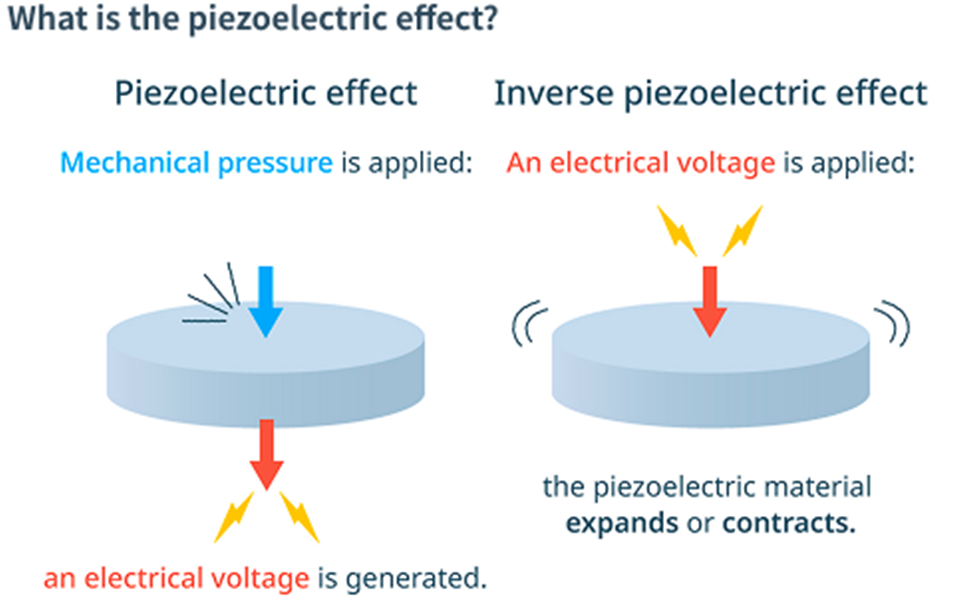
Piezoelectricity is the ability of a material to generate an electrical charge when mechanical pressure is applied and, conversely, to produce mechanical motion when an electrical signal is applied. This principle is widely used in microphones, sensors, and speakers, and is fundamental to modern piezoelectric devices. Traditionally, these devices have been manufactured using aluminum nitride (AlN), a piezoelectric thin-film material deposited through sputtering processes.
In recent years, scandium-doped aluminum nitride (ScAlN) has emerged as a promising next-generation piezoelectric thin-film material. By adding scandium (Sc) to AlN, piezoelectric performance can be increased severalfold compared with conventional AlN films. This enhanced performance opens the door to meaningful improvements in the performance of electronic components.
AlSc sputtering targets supporting the future of high-speed, high-capacity communications (5G/6G)
ScAlN thin films formed using AlSc sputtering targets enable wider bandwidth through the addition of scandium. This expanded bandwidth increases the volume of data that can be transmitted simultaneously, making it possible to support the high-frequency, wide-band, and high-speed data transmission required for RF filters used in smartphones and other devices. As a result, these films support 5G communication standards and are expected to play a critical role in the development of future 6G technologies.
Beyond smartphones and base stations, attention is increasingly turning to non-terrestrial networks (NTN) as a core component of next-generation communication infrastructure. NTN technologies, including communication satellites, high-altitude platform stations (HAPS), and unmanned aerial vehicles, enable connectivity in areas that are difficult to cover with terrestrial networks alone, such as maritime regions, mountainous terrain, remote islands, and disaster-affected areas. One prominent example is the rapid expansion of low Earth orbit (LEO) satellite communication services, such as Starlink.
Because LEO satellite networks typically operate at higher frequency bands than terrestrial systems, the demand for stable, high-performance RF filters continues to grow.

Overcoming technical challenges and expanding adoption
Furuya Metal began focusing on ScAlN around 2011, initially in response to customer requests for contract sputtering deposition. In the early stages, development centered on small-diameter targets for research applications. Over time, however, demand gradually shifted toward large-diameter targets suitable for mass production.
Manufacturing large-diameter targets requires not only forming alloy plates, but also achieving a uniform dispersion of aluminum and scandium throughout the material. To address this challenge, Furuya Metal explored and evaluated a variety of approaches, ultimately applying its accumulated know-how from the production of ruthenium sputtering targets.
While the development process involved extensive trial and error, the company succeeded in establishing a manufacturing technology in 2019 that enables uniform dispersion of aluminum and scandium. This technology made it possible to produce next-generation AlSc sputtering targets for piezoelectric thin-film applications, offering improved durability and reduced susceptibility to cracking compared with conventional methods.
In addition, higher scandium concentrations in the target material are essential for enhancing piezoelectric performance. The manufacturing process established by Furuya Metal allows more precise control of scandium concentration than conventional approaches. These improvements in quality and performance have gradually gained recognition among customers, enabling Furuya Metal—despite being a later market entrant—to expand its customer base both in Japan and overseas.
This manufacturing technology was patented in 2025.
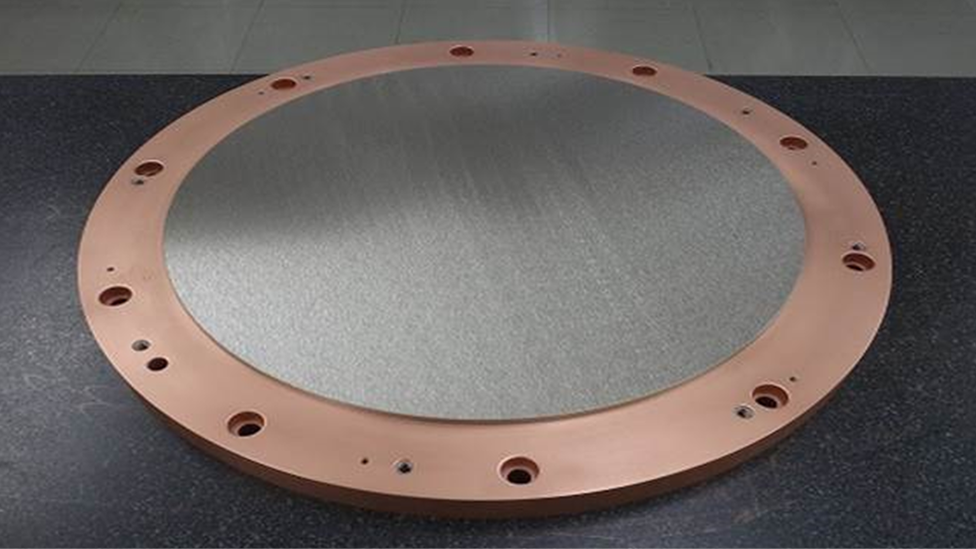
Large-diameter, high-density AlSc sputtering target
Toward the establishment of a circular business model
As adoption of AlSc sputtering targets continues to grow, securing a stable supply of scandium—a rare metal—has become essential. Furuya Metal has already established recycling technologies for ruthenium target materials and is advancing a circular business model. The company now aims to extend this approach to aluminum–scandium materials. By collecting spent sputtering targets from customers, along with residual materials remaining in equipment, Furuya Metal plans to recover and recycle valuable resources for reuse. Through this initiative, the company seeks to deepen collaboration with a broader range of customers.
In parallel, Furuya Metal is advancing technologies to extract metallic scandium from scandium oxide through joint development with the New Energy and Industrial Technology Development Organization (NEDO). Together, these efforts support the establishment of a stable supply system for AlSc sputtering targets.
Advancing development with a view to next-generation applications
AlSc sputtering targets developed and supplied by Furuya Metal play an increasingly important role in enabling RF filters for smartphones and other devices that demand high-frequency, wide-band performance for 5G and emerging 6G technologies. To further accelerate innovation in this area, the company is collaborating with research institutes and universities to develop materials capable of delivering even higher levels of performance.
By combining its core materials technologies with proven mass-production capabilities, Furuya Metal aims to support the continued evolution of next-generation applications and contribute to the advancement of the electronics industry from a materials perspective.