November 13, 2026
Furuya Metal Embarks on Demonstration Trial with Asahi Kasei and Circularise for Precious Metal Traceability in Chlor-alkali Electrolysis Electrodes and Digital Product Passport (DPP) Issuance
Furuya Metal Co., Ltd. (Head office: Toshima-ku, Tokyo; President: Takahito Furuya; “Furuya Metal”) has launched a demonstration trial with Asahi Kasei Corp. (Head office: Chiyoda-ku, Tokyo; President and Representative Director: Koshiro Kudo; “Asahi Kasei”) and Circularise B.V. (Head office: The Hague, the Netherlands; “Circularise”), a company in which Asahi Kasei has invested, to evaluate the feasibility of ensuring traceability for precious metals used in chlor-alkali electrolysis electrodes and issuing Digital Product Passports (hereinafter, “DPP”)*1.
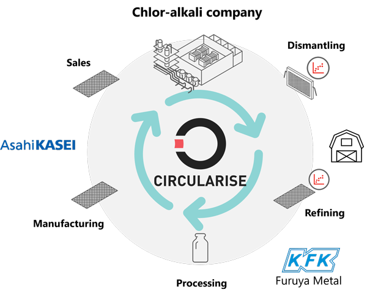
This initiative builds on the “Demonstration Trial Regarding Recycling of Metals for Chlor-alkali Electrolysis Cells and Electrodes” launched in 2025 by Asahi Kasei, Nobian, Furuya Metal and Mastermelt. In addition to the circular utilization of precious metals recovered from end-of-life electrodes, the initiative will digitally track and visualize the origin and circulation history of these metals, with the aim of achieving both circular resource utilization and greater supply chain transparency.
■ Background
Precious metals such as iridium (Ir) and ruthenium (Ru) are critical minerals used across a wide range of industries, including in chlor-alkali electrolysis electrodes, electronic components and semiconductor materials. Demand is also expected to grow in hydrogen production using proton exchange membrane (PEM) water electrolyzers*2.
However, these precious metals come from limited sources. According to the International Platinum Group Metals Association (IPA)*3, global annual primary iridium production is estimated at around 7 metric tons, and annual ruthenium supply at approximately 30 metric tons. Production is concentrated in a very small number of regions, and most of it is obtained as a by-product of platinum mining. In addition to these supply constraints, rising demand and growing price volatility in recent years have heightened the importance of securing a stable supply of these resources and using them effectively. As a result, there is growing interest in recycling precious metals recovered from end-of-life products and using them as circular resources.
■ Key Details of the Demonstration Trial
In this demonstration trial, Furuya Metal, which has extensive expertise in the refining, processing, and recycling of Ir and Ru, will collaborate with Asahi Kasei to evaluate the feasibility of establishing traceability and issuing DPPs for the circular utilization of precious metals in chlor-alkali electrolysis electrodes. The trial will use proprietary technology from Circularise, which has provided supply chain traceability and data-sharing solutions in Japan and around the world for about 10 years. The technology allows only the necessary information to be shared across the supply chain while protecting companies’ confidential information.
The trial will proceed in the following phases:
■ Outlook
Going beyond conventional recycling, this trial aims to enhance the value of circular resources by making visible “what resources have been circulated, and through what routes.”
*1 Digital Product Passport (DPP): A mechanism for digitally recording and sharing information on a product’s raw materials, manufacturing, recycling, and other aspects. It helps identify the origin and history of products and resources, contributing to greater supply chain transparency and the circular use of resources.
*2 PEM water electrolyzer: A device that produces hydrogen and oxygen by electrolyzing water, using as its electrolyte a solid polymer membrane that conducts hydrogen ions (proton exchange membrane).
*3 IPA Fact Sheets (May 2026)
Iridium: https://www.ipa-news.com/assets/pdfs/factsheets/2026-05-ipa-iridium-factsheet.pdf
Ruthenium: https://www.ipa-news.com/assets/pdfs/factsheets/2026-05-ipa-ruthenium-factsheet.pdf
*4 Recycled metal: Precious metals recovered and refined from end-of-life electrodes and formed into bullion that can be reused.
[About Asahi Kasei Corp.]
For 50 years since commercializing its membrane process for chlor-alkali electrolysis in 1975, Asahi Kasei has earned a strong reputation among customers for its long track record and the breadth of its chlor-alkali process technologies, which it can supply on a one-stop basis. Asahi Kasei’s chlor-alkali process has been adopted at more than 160 plants in 30 countries as of December 2024, with a cumulative order volume of over 30 million tons per year converted to 100% caustic soda, making Asahi Kasei a supplier with a proven global track record. The membrane process for chlor-alkali electrolysis produces chlorine, hydrogen, and caustic soda by electrolyzing brine using ion-exchange membranes.
■ Asahi Kasei Chlor-alkali Business Website
https://chlor-alkali.asahi-kasei.co.jp/
Head office: Hibiya Mitsui Tower, 1-1-2 Yurakucho, Chiyoda-ku, Tokyo